Article by: Lyfe Marketing
Why is your social media web traffic low?
Today, we’re going to give you 7 steps you need to know to dissect your social media ads and drive the website traffic you’ve been looking for.
So if you want to know how to start seeing significant website traffic from social media, let’s jump right into it!
In a poll conducted by Search Engine Journal, they found that the top social media platforms for driving the most website traffic were:
- Facebook,
- Twitter,
- LinkedIn, and
- Pinterest.
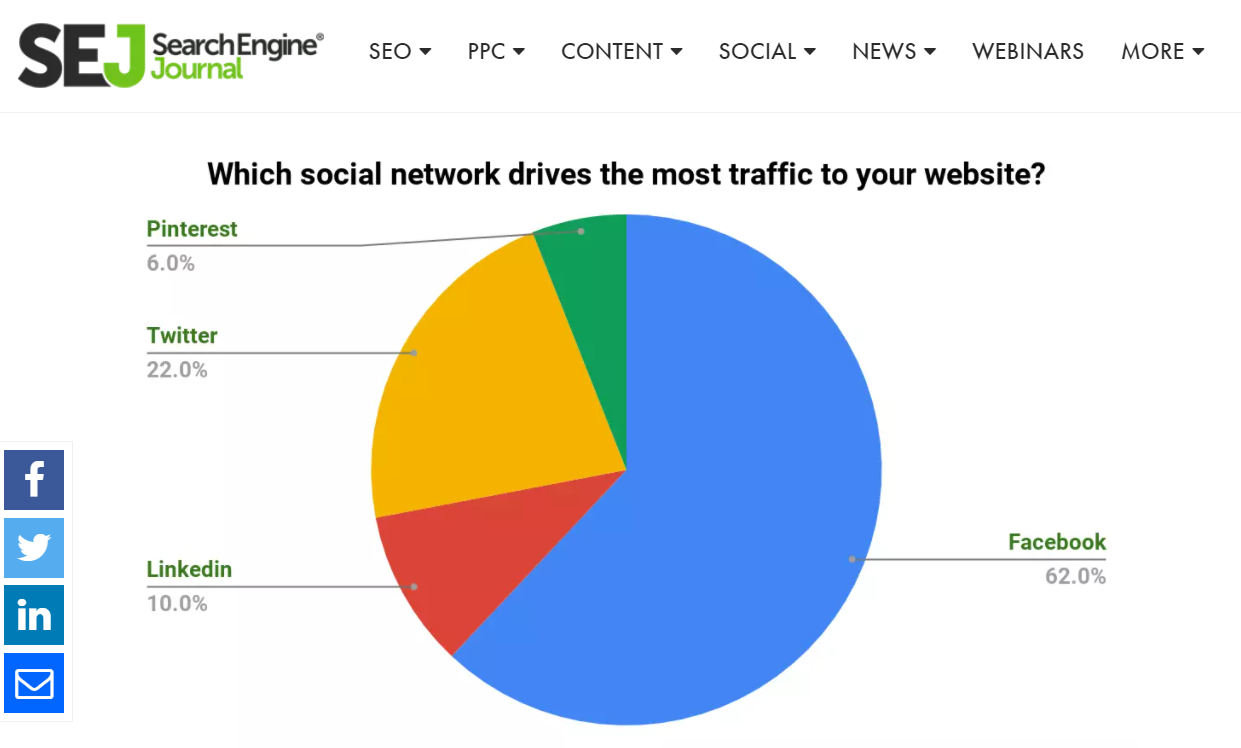
Does that mean we think those are the social media platforms you should be on? Not necessarily.
We mean, Instagram isn’t on that list, and we know from experience that Instagram is a huge driver of website traffic for a lot of our clients.
What works for one business may not work for another, so you need to figure out where your target audience spends the most time.
Make sure you:
- Research the demographics of the different social media platforms,
- Identify which is the most prevalent with your target audience, and
- Start spending some time on that social media platform.
If you’re not already, get familiar with the platform, the tone, and style of what people post on the app, the general tone of voice, etc.
In order to drive the most traffic from social media, you need to find the social media platform with the largest pool of your target audience…
…so start by researching the different social media platforms with your business in mind.
#2. Research your target audience
You’ve determined which social media platform your audience spends the most time on.
Now it’s time to figure out what your target audience is responding well to on that platform.
What are they engaging with the most?
Take some time to identify the thought leaders and top profiles in your industry on the platform.
This could include competitors or accounts with large followings that share the same target audience as you.
Study the posts from those accounts that have the most likes and comments.
This will help you create a topic map of ideas of what your audience cares about as it relates to your industry.
After studying these accounts and their engagement for a while, your audience’s goals and pain points should become even clearer.
Researching your audience here will help you prepare for the next step.
#3. Post free valuable content first
To get them attracted to your brand and convince them to follow you, you need to give as much value to them as possible.
And if you’ve identified their goals and pain points, you’ll know what kind of content is valuable to them.
This should be a priority first before hitting with them your CTA and ads. It goes back to the bigger picture of your marketing funnel.
You need to warm people up to your brand before asking them for the sale. That’s why awareness and engagement are at the top of the funnel.
If you’re paying for social ads that are being delivered to a cold audience who has never heard of you before, and you’re not seeing any results…
…then that could be why your social media web traffic is low.
A recent survey found that 81% of consumers said that they need to be able to trust the brand in order to buy from them.
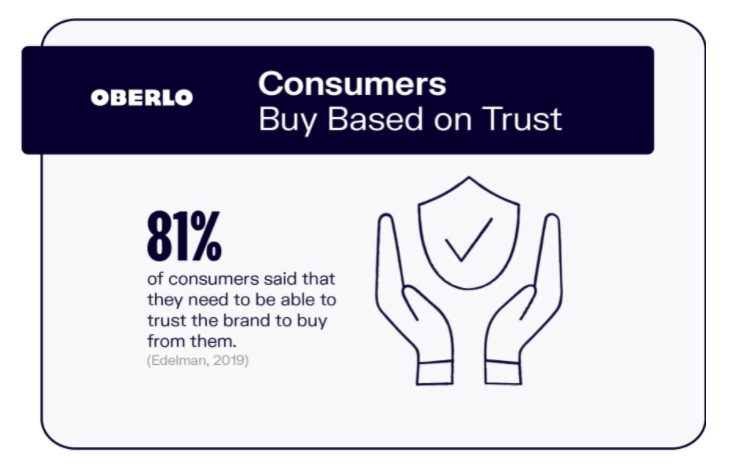
And for most small businesses, that trust doesn’t happen upon seeing one ad.
That’s why you want to provide valuable information first, at no risk or cost to them…
…to warm them up to you and make them more likely to click to your website later on.
In our case, for example, that looks like us giving you guys free marketing tips and strategies on our blog, YouTube channel, and social media platforms.
For an eCommerce fashion store, that could be fun Instagram reels that show an outfit of the day using the clothes you sell.
You just want to provide value constantly.
And in producing this content, you may find yourself wanting to post more and more often.
But my caution to you here is don’t just post to post. Only post what’s really engaging to people.
If you post a lot and people don’t engage with it, the algorithm on any social media app will usually lower your organic reach as a result.
And organic reach is usually already pretty low to begin with.
So try to only put out thoughtful content, because that will help you get organic engagement.
And organic engagement is great for gaining favor with your followers and the algorithm.
After you’ve built a bit of a following and you’re putting out consistently strong content that your target audience is engaging with…
…it’s time to talk about the next step.
#4. Determine your end goal
Now you might be thinking that this step feels out of place.
Like, shouldn’t you determine your goals before you start marketing? Yes.
But what we’re talking about here, specifically, is about determining your goal for your social media.
What is the desired result you wish to see from them?
Do you want to see direct sales from social media?
Do you want to see lead form completions from it?
Or do you measure your social media success in awareness and engagement?
Now in this post, we’re specifically going over how to increase your web traffic from social media, so the assumption is that that would be your goal.
But what do you want them to do from there?
You need to figure this out now, so that your message can be clear to your audience when you do deliver ads to them and give them your CTA.
Alright, now let’s get into the last thing you need to do before we start sending traffic to your site from social media.
#5. Nail down your offer
You know what you want your website visitors to do when they get to your site, but what’s the thing that’s going to get them there?
What would be an incentive for them to look at your site?
The answer to these questions will look very different from B2C to B2B, from industry to industry, and so on. But the general answer is a lead magnet.
A lead magnet can look like a free trial, a coupon code, a free ebook, etc.
Ideally, you want to attract social media followers to click to your website, because if they do, they will get something of value to them for free.
If you’re B2C, honestly, a discount code will do it most of the time.
But a pro tip is to make the discount code something relevant to the platform they’re on, so that they think it’s time sensitive or exclusive to them.
For example, consider you own a business called Sally’s Garden Shopwhere you sell gardening tools, and you’re running ads on Facebook.
Your discount code could be SGSFacebook10 (or whatever the percentage off is as the number).
So when somebody is scrolling on Facebook, they are more likely to click right away or, at the very least, screenshot it for later.
This is because they feel like the discount code is specific to the action of them scrolling on Facebook in that moment…
…and they don’t want to lose out on access to the discount.
Whatever your offer is, you want to finalize it now so that you know how to create your ads and what to center them around.
So with that, let’s move on to the next step.
Every social media platform has its own advertising platform on the backend.
Facebook has one that works for both Facebook and Instagram, Twitter has one, Pinterest has one, LinkedIn has one, and so on.
And one reason so many people have gravitated towards these ad platforms is because organic reach has gone down on social media over the years.
You can’t organically drive traffic to your website as much as you once could.
So, advertising dollars give your content a boost in reach to put an ad or post you want in front of more eyeballs within a target audience that you select.
Now, it’s important to know that different advertising platforms offer different ad campaigns.
Facebook and Instagram have the most objectives.
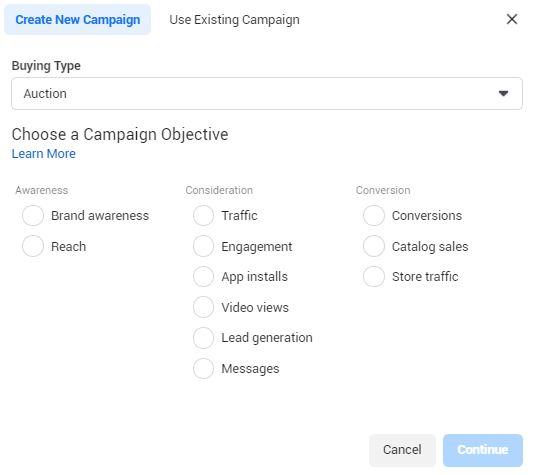
Whichever ad platform you’re on, it’s important to pick the right campaign, because campaigns optimize for their objectives.
Facebook is showing the ad to people within your selected audience who mightconvert if you select the conversion campaign.
If you choose the traffic campaign, Facebook is showing your ad to people who might click on your site. However. they may do no more than that.
That’s why you will rarely ever see us select traffic. We almost always select the conversion objective if the goal is website sales or lead form completions.
But if you’re doing everything else on this list, and you’re running ads, and you’re thinking, “Man, I’m still just not seeing a lot of traffic from my social media”…
…then choosing the wrong campaign is one of a few ad mistakes you could be making.
And even though it’s an Instagram ad mistakes video, the majority of the mistakes on that list could be applied to any digital advertising platform.
So give that a read next, and for now we’ll move on to our final step.
#7. Keep on keepin’ on
Once you’ve got your ads up and you’re starting to see some consistent results coming in, you’ll want to continue your efforts.
If you have found what’s working, do more of that.
And do it both on the original social media platform you started on. And do it on other platforms that maybe had the next highest counts of your demographic too.
The key to continue growing your web traffic from social media is to:
- Do more of what you know to be successful, and
- Continuously optimize your campaigns around the factors that are working.
And that’s all we have for you today.